

Italian Acetate
Mazzucchelli 1849
Every Bixby The Original comb begins with Italian acetate from Mazzucchelli 1849.
Founded in Italy in 1849, Mazzucchelli has a long history of producing cellulose acetate for products where material, color, pattern, and finish are an important part of the design.
Bixby selects Italian acetate for its warmth, depth, substantial feel, and the way the material responds to carving and polishing.
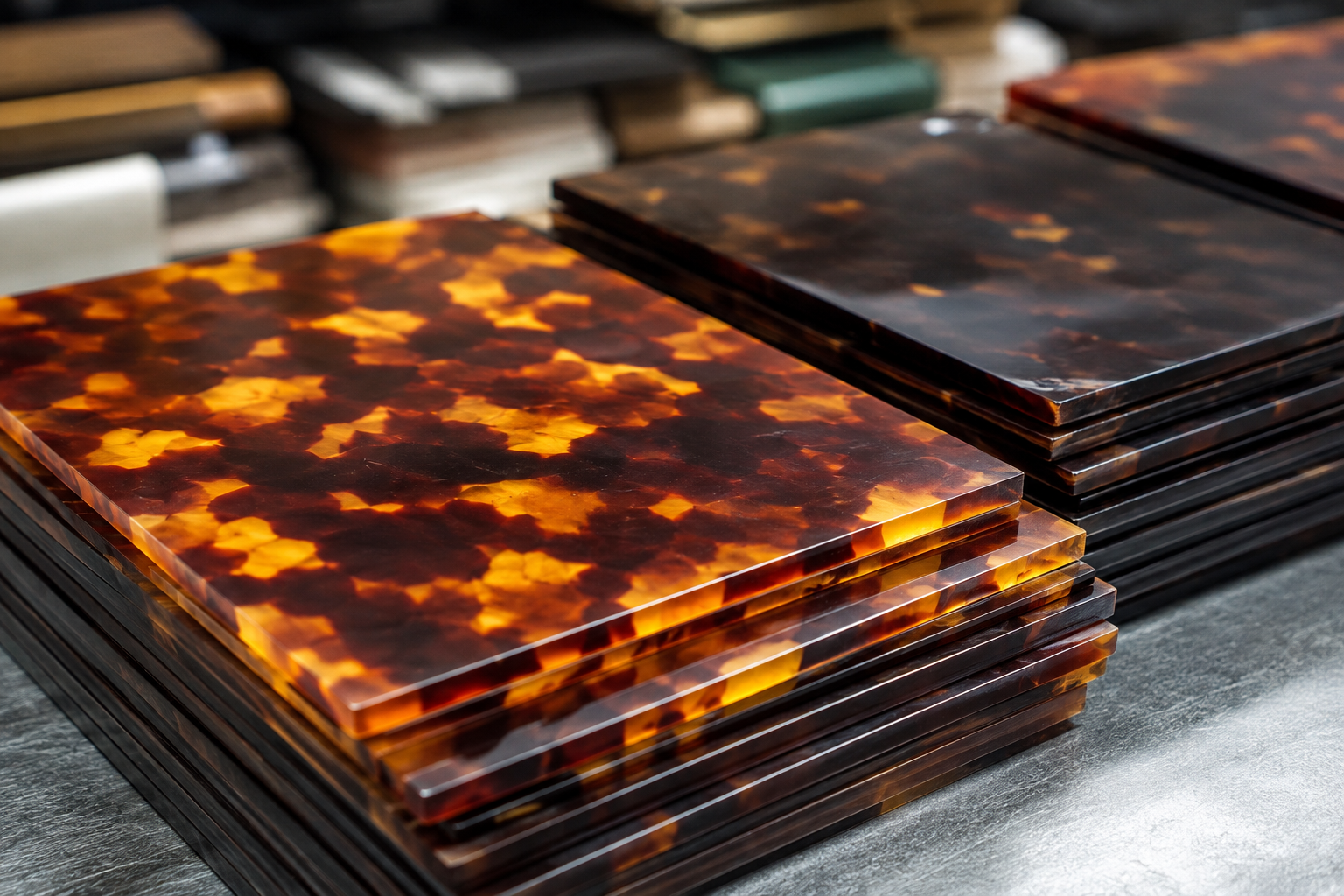
Cellulose to Acetate
Italian acetate begins with cellulose derived from renewable plant sources, including selected trees and cotton linters.
The cellulose is processed into cellulose acetate and combined with other components that give the finished material its flexibility, toughness, and workability.
The result is a material that can be cut, carved, shaped with heat, and polished.
Those characteristics are particularly important to Bixby because the material has to work with the original design of the comb.
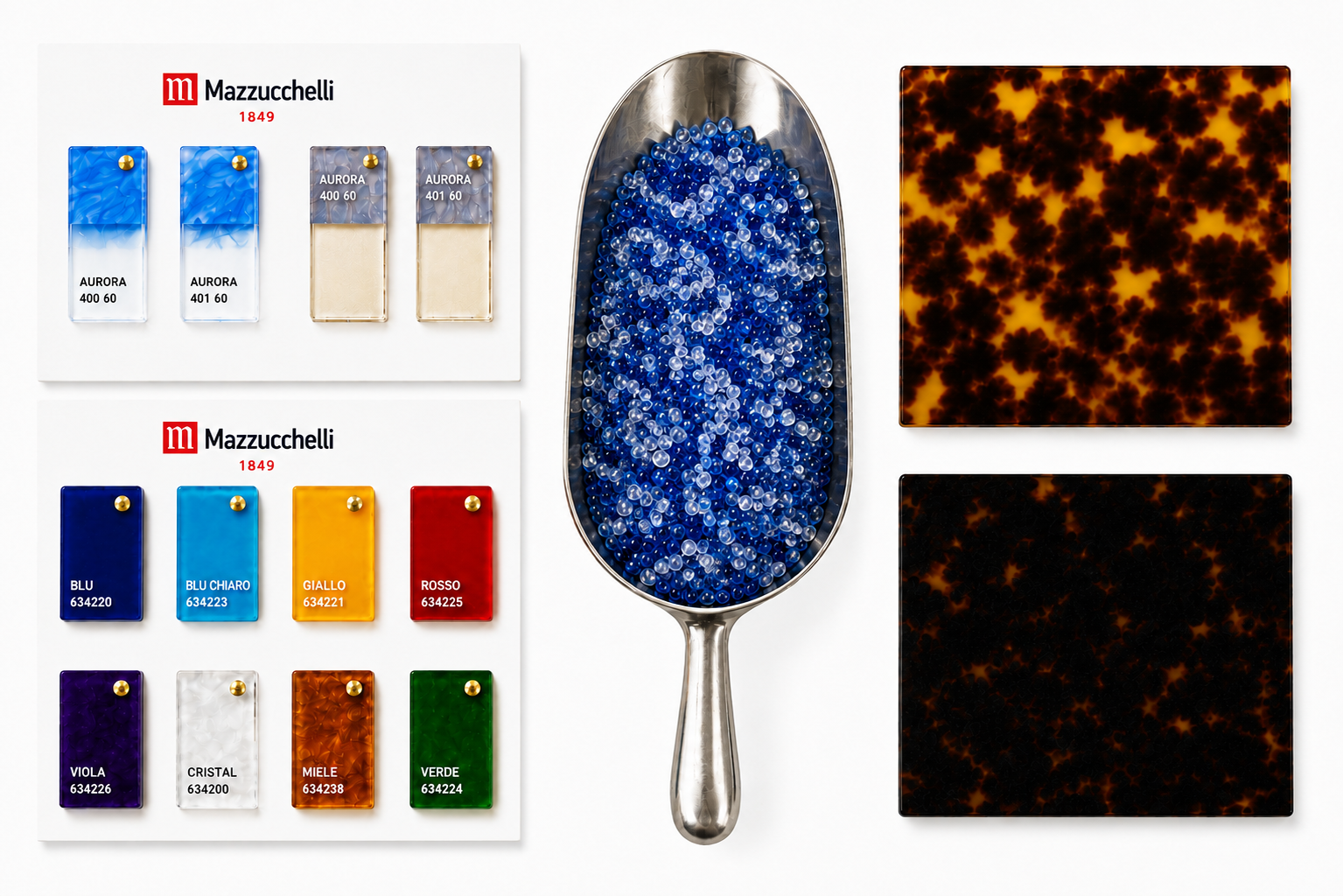
ColorS and PatternS
One of the defining characteristics of Italian acetate is the way colors and patterns can be built into the material itself.
Colored sheets can be layered, combined, pressed, cut, and reassembled to create everything from translucent colors to complex tortoise patterns.
The pattern isn't simply printed onto the finished surface.
It has depth within the material.
That depth becomes increasingly visible as the acetate is worked.
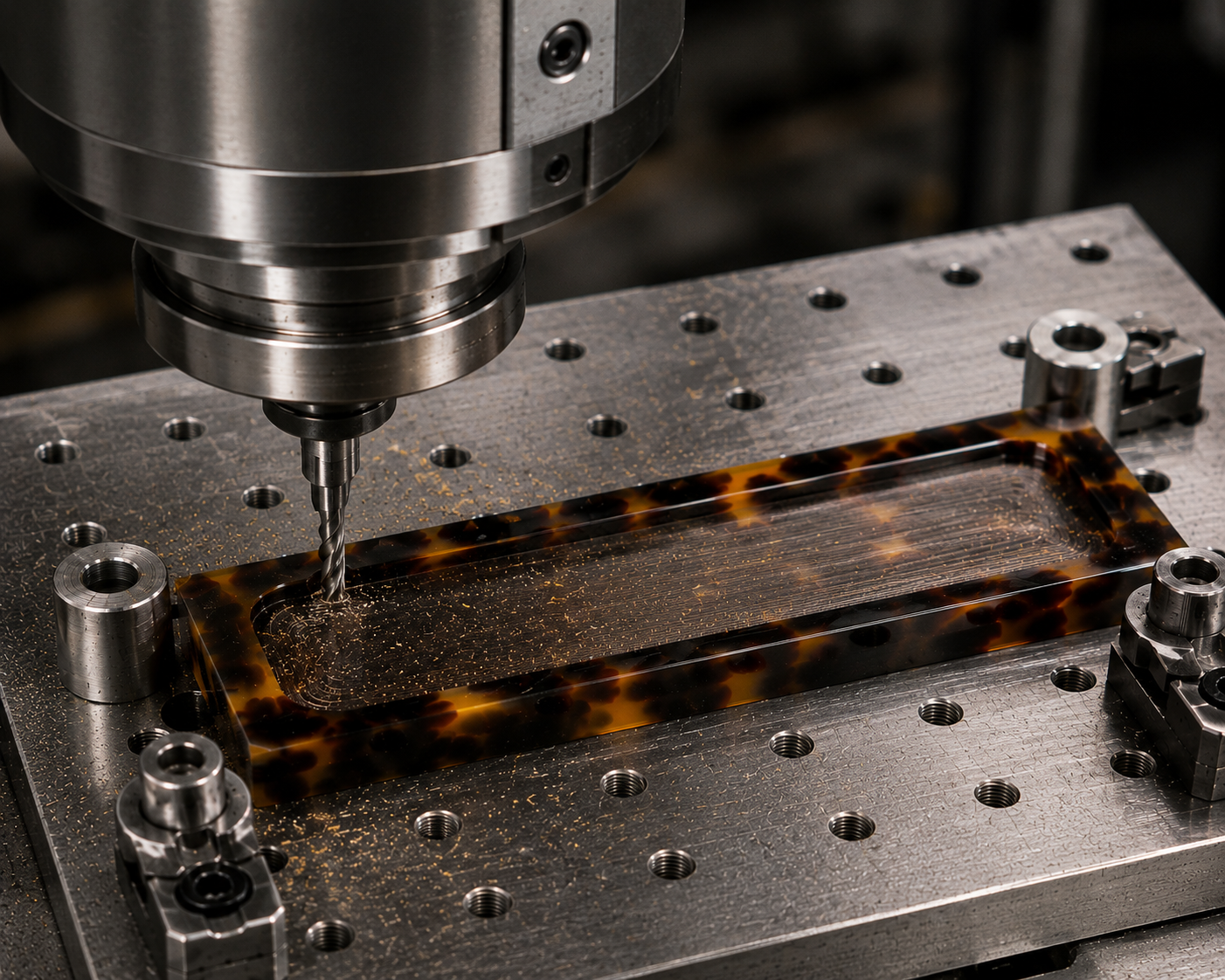
Multi-Axis Machining
Bixby The Original starts with an acetate blank and removes material to create the form of the comb.
As the acetate is carved, different layers and portions of its pattern are exposed.
This means the shape of the Bixby comb and the pattern of the acetate interact with one another.
Even combs produced from the same acetate can show subtle variations in how the pattern appears across the finished piece.
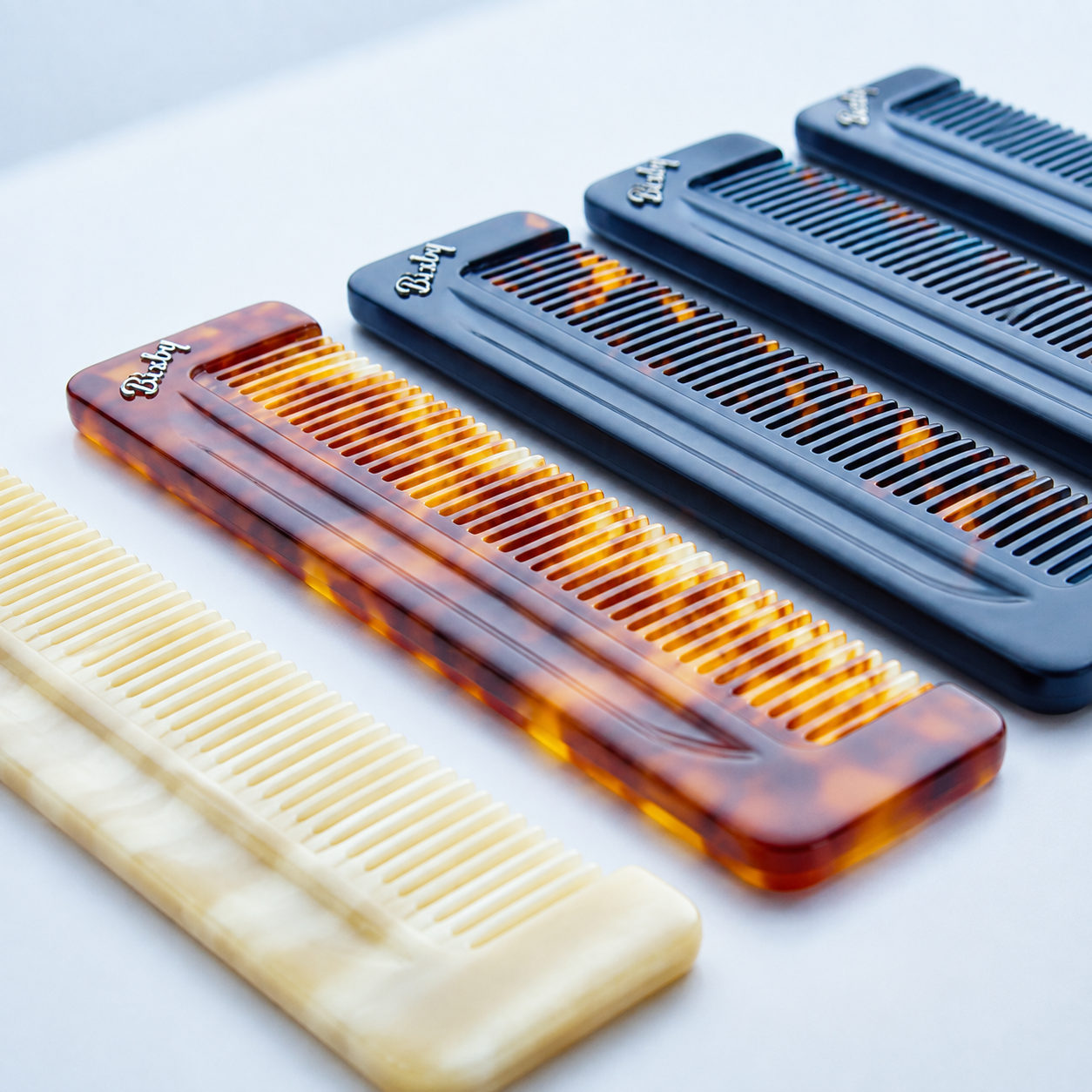
Barrel and Lathe polishing
After carving and shaping, the acetate is polished to develop its final surface and reveal the visual depth of the material.
Colors become richer.
Patterns become more defined.
Translucent areas interact with light differently from opaque areas.
The material changes visually depending on its color, pattern, thickness, and the contours of the finished comb.